

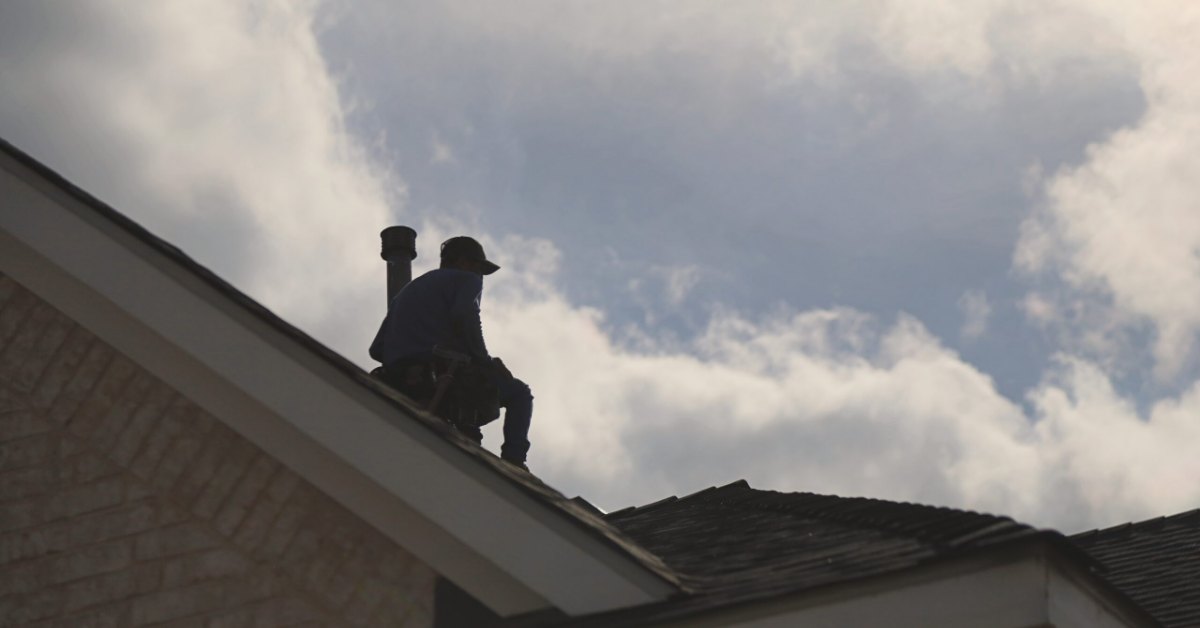
Spring in Rockwall County means hail. Some years it is pea-sized and gone in two minutes. Other years it comes through Fate, Royse City and Rockwall with stones the size of golf balls, and by the next afternoon there are out-of-state trucks parked on every corner of the neighborhood.
If you are reading this the day after a storm, take a breath. Most hail damage is not an emergency, and the steps you take in the first week matter more than how fast you take them. This is the same order of operations we walk our own customers through.
1. Stay off the roof
A wet roof with fresh granule loss is slick, and hail can crack shingles in ways that make them shift under your feet. You do not need to be up there to know whether you have a problem. Everything in the next few steps can be done from the yard, the driveway or a window.
2. Check the things you can see from the ground
Hail leaves evidence all over a property, not just on the shingles. Walk the outside of the house and look for:
- Dents in gutters, downspouts and the metal flashing around chimneys
- Dings on the AC condenser fins, mailbox, grill or patio furniture
- Spatter marks on fences, siding and the driveway where hail knocked off dirt or oxidation
- Piles of shingle granules at the bottom of downspouts (they look like coarse black sand)
- Torn window screens and chipped paint on window trim
If the soft metals around your house are dented, there is a good chance the roof took hits too. If you see none of this, the storm may have missed you, though a roof inspection is still cheap insurance.
3. Look inside for leaks
Check ceilings in upstairs rooms and closets, and take a flashlight into the attic if you can get there safely. Wet insulation, water stains on the decking or drips around vent pipes are signs water is getting in now. That is the one situation that does need fast action. A leaking roof can be tarped the same day, and we cover how that works on our emergency roof tarping page.
4. Photograph everything, with dates
Before anything gets cleaned up, take photos. Get the hail on the ground if it has not melted yet, with something next to it for scale like a coin or a tape measure. Photograph dented gutters, damaged screens and any interior stains. Your phone timestamps them automatically, which helps tie the damage to a specific storm date.
It also helps to write down the date and rough time the storm hit. Insurers look up weather data for your address, and a claim lines up best when your date matches theirs.
5. Get a real inspection before you file
This step saves a lot of headaches. Filing a claim for a roof that turns out to be fine still goes on your claims history. A proper inspection tells you whether there is damage worth claiming before you make the call.
A good inspection covers every slope of the roof, the ridge, vents, flashing and the soft metals. The inspector should mark and photograph hail hits on each side of the house and show you what they found. At Fate Roofing Group our roof inspections are free, and you get the photos whether we end up doing any work or not.
6. If there is damage, call your insurer
Most homeowner policies require you to report damage promptly, and many put a time limit on claims counted from the date of the storm. Check your own policy for the exact window. When you call, give them the storm date, a short description of what you found and your photos.
The insurance company will send an adjuster. You are allowed to have your roofer there for that visit, and we recommend it. The adjuster and the roofer can walk the roof together, which tends to mean fewer missed items and fewer second visits. Our insurance claim help page goes through that meeting in more detail.
One thing to know up front: in Texas, a roofer cannot negotiate your claim for you or act as a public adjuster. Your coverage is between you and your insurance company. What a roofer can do is document the damage well, meet the adjuster and explain what the repair actually takes.
7. Watch out for storm chasers
After a big storm, crews from out of state knock on doors offering free roofs. Some do decent work. Plenty do not, and they are gone before the first leak shows up. A few warning signs:
- They offer to pay or waive your deductible. That is illegal in Texas, and it puts you at risk too.
- They want you to sign something on the spot, especially anything that assigns your insurance money to them.
- They cannot give you a local address, local references or proof of insurance.
- They push you to skip the inspection and file right away.
Ask anyone you are considering how long they have worked in your area and who you can call about a job they finished last year. A local roofer will still be here when the warranty matters.
8. Don’t let small damage sit
Hail damage that does not leak today can leak next year. Cracked shingles and bruised mats let water into the layers underneath, and the next storm or a summer of heat finishes the job. If your inspection found damage, getting it repaired or replaced while the claim window is open is almost always the better move.
A quick recap
Stay off the roof. Check the gutters, AC unit and fences for dents. Look for leaks inside. Take dated photos. Get an inspection before you file, then call your insurer if there is real damage, and have your roofer meet the adjuster. Say no to anyone who offers to cover your deductible.
If a storm just came through Fate, Rockwall, Heath or anywhere nearby, call us at (972) 569-7012 or request a free inspection. We are a local, family-owned crew, and we will tell you plainly whether you have a claim or not.

Matthew Martin
Matthew Martin is the founder of Spade Design and part of the Fate Roofing Group team, where he runs the website and online marketing. He writes these guides with the crew so homeowners in Fate, Rockwall and Heath can get straight answers about storms, insurance and roof care before they ever pick up the phone.