

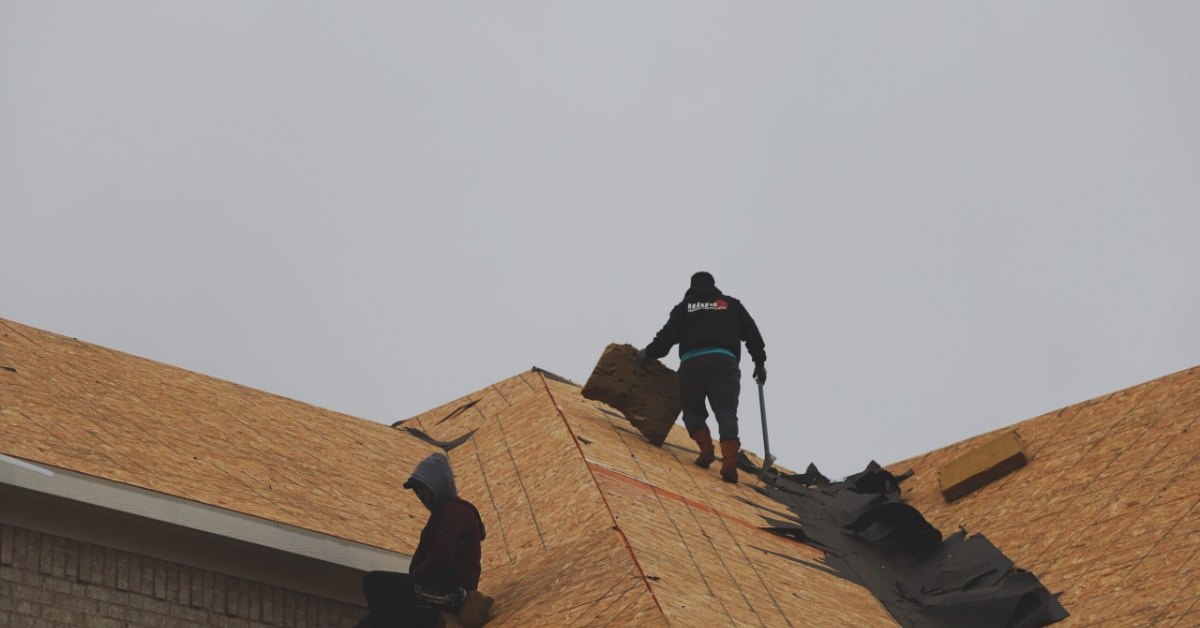
When people think about storm damage in Rockwall County, they think hail. Wind does just as much harm and gets far less attention. Spring and early summer storms here regularly bring straight-line gusts strong enough to lift shingles, peel back ridge caps and drop branches on the roof.
The tricky part is that wind damage is often subtle. A roof can look fine from the street and still have shingles that have come unsealed and are waiting for the next storm to blow them off.
How wind damages a shingle roof
Asphalt shingles are held down two ways: nails, and a strip of adhesive that bonds each shingle to the one below it once the sun warms it up. Strong gusts get under the edge of a shingle and lift it. If the seal breaks, the shingle can flap, crease or tear off entirely. Even when it settles back down, the bond is gone, and the next storm has an easier time.
Edges get hit hardest. Eaves, rakes, ridges and corners take the most force, which is why those are the first places to check.
Signs to look for
From the ground
- Missing shingles, or bare patches where you can see the black underlayment or the wood decking
- Shingle pieces in the yard, driveway or gutters
- Ridge caps that look lifted or out of line
- Bent or loose drip edge and flashing along the roof edges
- Tree limbs on the roof or leaning against it
Up close (best left to a roofer)
- Creased shingles with a horizontal line across them, a sign they lifted and folded back
- Shingles that lift easily by hand because the seal strip has broken
- Nails backed out or exposed
- Torn or missing pieces around vents and pipe boots
Inside the house
Check upstairs ceilings and the attic after any big storm. Stains, damp insulation or drips around vents mean water is already getting in. If that is happening, the roof needs to be covered quickly. We handle that with emergency roof tarping.
Why small wind damage matters
A few missing shingles sound like a minor repair, and often they are. The issue is what happens if they sit. Exposed underlayment breaks down in the Texas sun, and water that gets past it rots the decking. A small repair this month can turn into replacing sheets of plywood next year.
Unsealed shingles are the other hidden risk. They do not show from the street, but they are the first to go in the next storm. A roofer can check whether shingles are still bonded and whether a repair will hold or the roof is past the point where sealing it makes sense.
Does insurance cover wind damage?
Most Texas homeowner policies cover sudden wind damage from a storm, usually under the same wind and hail deductible. They generally do not cover wear and tear or damage from age. That is why documentation matters. Photos taken soon after the storm, with the date, help show the damage came from a specific event. Our guide to how a roof insurance claim works in Texas walks through the rest.
What to do after a windy storm
Stay off the roof. Walk the yard and look for shingle pieces and bare spots. Check the attic. Take dated photos of anything you find. Then get a professional inspection before deciding whether to file a claim. If only a few shingles are gone and the rest are sealed, a roof repair may be all you need.
We inspect for free and send you photos of what we find. Call (972) 569-7012 or request an inspection online.

Matthew Martin
Matthew Martin is the founder of Spade Design and part of the Fate Roofing Group team, where he runs the website and online marketing. He writes these guides with the crew so homeowners in Fate, Rockwall and Heath can get straight answers about storms, insurance and roof care before they ever pick up the phone.